Since Jul 2025
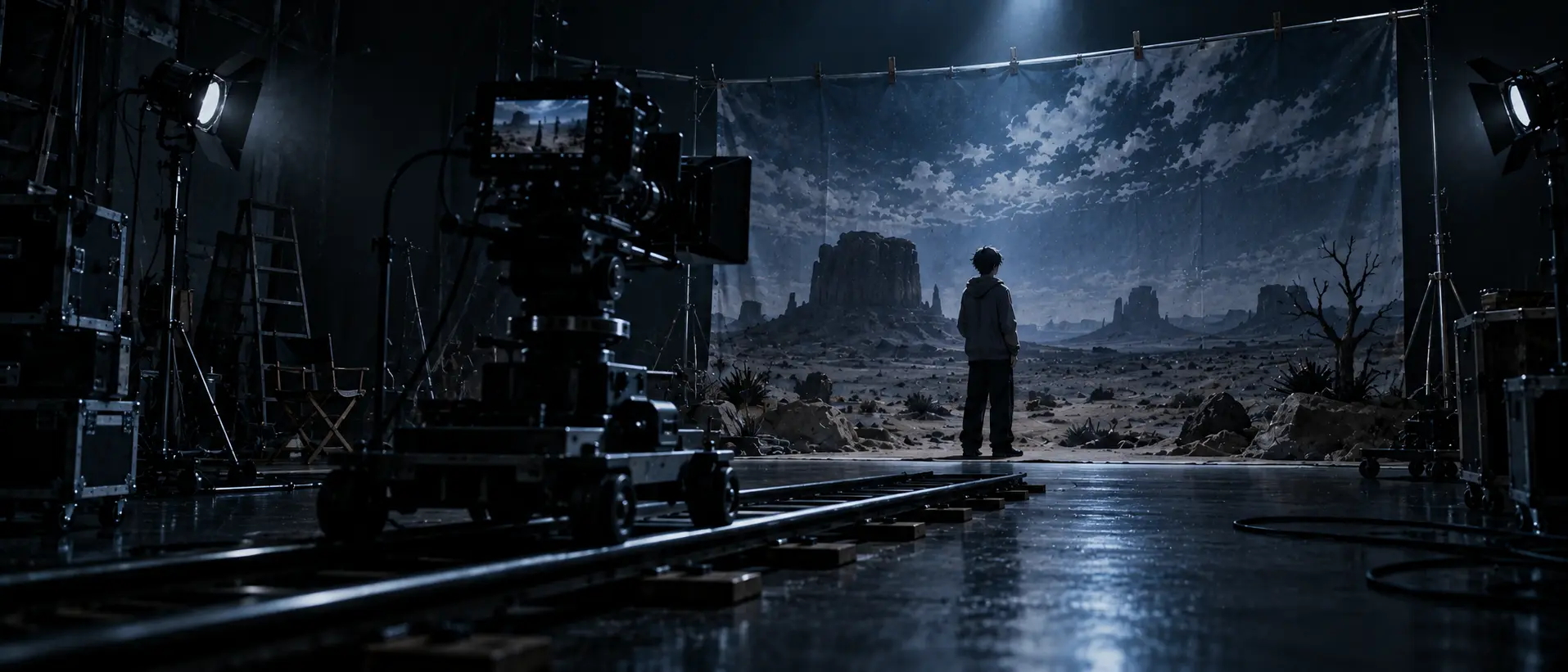
Hybrid: film the actors, generate the world
Real actors, a real crew and a real shooting day, and then the models build everything around them.
The loud half of AI filmmaking generates the whole film. The quiet half still shoots one. A crew films the thing only a person can give, the performance, and generative models build the rest: backgrounds, weather, crowds, light, and coverage nobody shot. Unveil put one performer on green screen and let Runway replace everything else for Salomon's Olympic campaign. CJ ENM shot The House in four days and generated the world around its actors. The Rolling Stones shot body doubles and wore their own 1970s faces on top.
Tutorials4
How to enhance live action footage with AI
Runway · YouTube · Feb 2026
How it works
- Previs the whole film, then shoot against it. Unveil built a thirty-shot storyboard in Runway before a two-day shoot near Paris, so the sixty people on set knew what the generated world would be. Martin Haerlin did the same on Griesson: pace, angles, wardrobe and set worked out in AI before the camera arrived.
- Shoot only what a person has to do. Faces, hands, the take. Haerlin shot Merle Schwietert on green screen and put the argument in one line: nuanced performance is irreplaceable. CJ ENM shot The House indoors in four days and generated every background around it.
- Replace the world with an edit model instead of a plate. Runway Aleph takes the footage you shot and swaps objects, changes the weather, relights and reframes it from a prompt. Luma Modify Video does it while pose, expression and lip sync survive, and Aleph 2.0 carries one frame's change across the sequence.
- Put the face or the character on last. Francois Rousselet shot the Rolling Stones video conventionally with credited body doubles, and Deep Voodoo laid the 1970s band over them. The version anyone can afford is Runway Act-Two or Kling Motion Control: film the performance on a phone and drive a generated character with it.
- Relight instead of compositing. Beeble SwitchLight turns a live plate into normals, albedo and roughness, so an actor can be lit after the shoot like a CG asset. Corridor rebuilt season three of Son of a Dungeon around it: green screen, CorridorKey for the matte, a phone for camera tracking, straight into Unreal.
- Generate the coverage you did not shoot. Feed an existing take back in with the character sheet and ask for the wide; the audio and the performance come with it. Christopher Gwinn found it in MiniMax H3 in August 2026 and Curious Refuge published the recipe two weeks later.
- Finish where you already cut. Since September 2026 the Runway panel sits inside Premiere Pro and After Effects, and edits land at the playhead. Topaz and Runway Ruby still do the last pass: upscale and real HDR.
Example Films7
More making-ofs8
How films were actually made, from the people who made them.
Related on the timeline8
- House of David Uses AI for 72 Shots2025
- Moonvalley's Marey Hits General Availability2025
- Luma Ray3 Modify2025
- Runway Aleph 2.02026
- Netflix: ~300 Programs Used Generative AI This Year2026
- Promise Developing Horror Feature 'Touch Grass'2026
- Danny Boyle: 'Ink' Contains About 30 Seconds of AI2026
- Runway Ships Inside Premiere Pro and After Effects2026
Sources & further reading7
- Inside Salomon's global brand campaign, built on Runway
- Wonder Project and Luma launch Innovative Dreams
- CJ ENM premieres the AI-hybrid feature The House
- House of David season 2 used 253 AI-generated shots
- How Eggplant rebuilt Life After People with Runway
- Luma: introducing Modify Video
- Netflix used generative AI on about 300 titles in the first half of 2026