Mar 2024 – Feb 2025
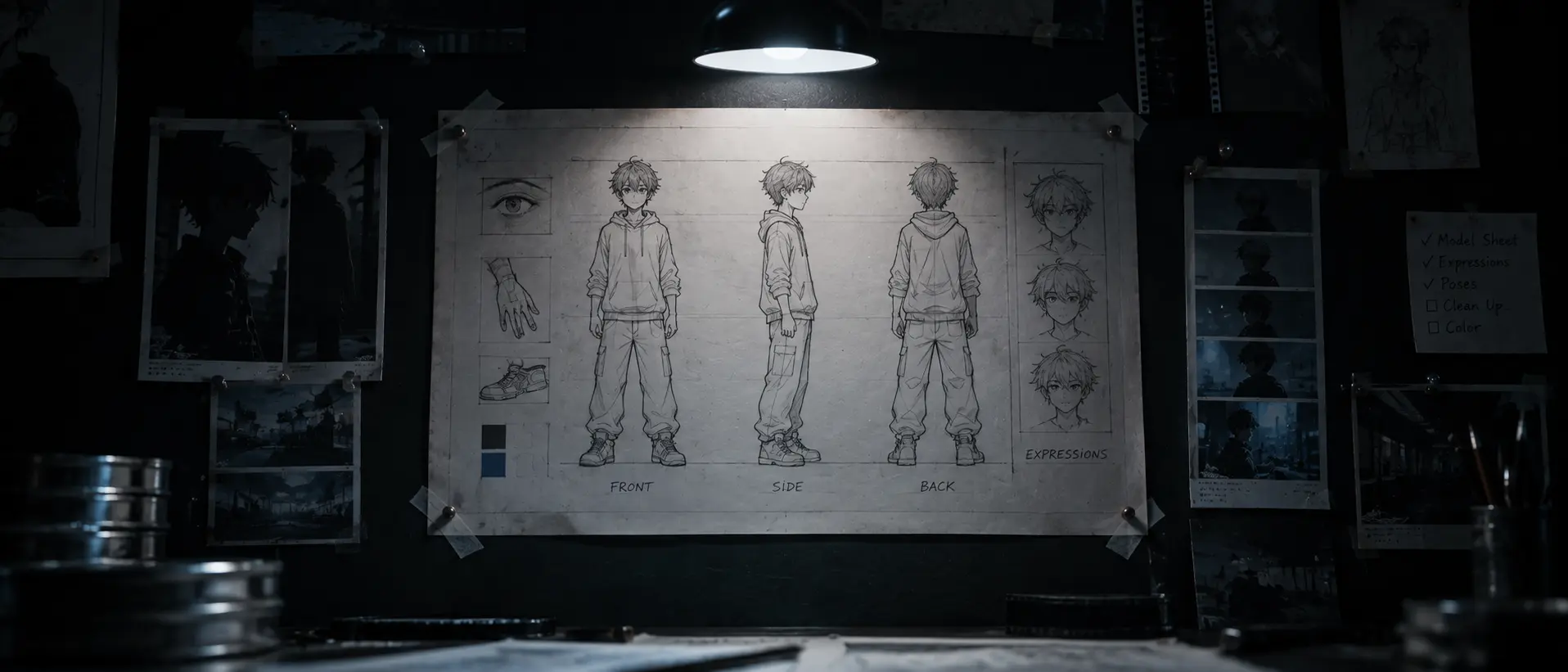
Character sheets
Identity comes from images, not luck: from Midjourney's character reference to Kling Elements.
Make a few views of your character, show them to the model, and it keeps that character across shots. The habit started in stills, with Midjourney's character reference in March 2024 and LoRAs trained on a dozen pictures, and moved into video in December 2024, when Kling, Pika and Runway all began taking several reference images at once: a face, an outfit, a location. The character sheet, long a staple of animation studios, became the first thing many AI filmmakers make.
Tutorials3
Consistent realistic characters with a Flux LoRA
Curious Refuge · YouTube · Nov 2024
How it worked
- Design the character first. Three or four views (front, profile, three-quarter) and a few expressions in Midjourney or Flux.
- Lock it in the stills. Midjourney's
--cref URL --cw 0–100(March 2024) carried a face into new images; for a harder lock, train a LoRA on ten to fifteen images and generate the keyframes through it. - Hand the sheet to the video model. Kling 1.6 Elements (December 2024) took up to four subject images plus a prompt; Pika 2.0 Scene Ingredients took as many as you liked, for character, wardrobe, props and setting; Runway Frames built consistent worlds to feed Gen-3.
- Fall back to the open stack when the hosted model drifts: DreamBooth, LoRA and IP-Adapter graphs in ComfyUI.
- Generate five-to-ten-second shots and cut them together in Premiere or Resolve, with Veo 2 for the shots that needed 4K polish.
Example Films5
More making-ofs1
How films were actually made, from the people who made them.
Related on the timeline2